Identify the softness
Inspect a small area at its normal viewing size. Uniform softness may suggest missed focus; doubled edges can indicate movement. Noise and compression blocks are separate problems that sharpening may exaggerate.
Image clarity guide
If you want to unblur image online free, first identify what made the photo look soft. Mild focus errors may respond to sharpening, while heavy motion blur or missing detail may not. Check a tool’s access terms and supported inputs before you submit an image.
Supavisual has 2×/4× upscale and background removal, but no dedicated unblur, deblur, or sharpen tool. Upscaling cannot reliably recover lost text or detail. This link opens its home page; sign-in and a paid AI plan are required. Any paired images here are illustrations of concepts, not verified processing results from this site or Supavisual.
Explore Supavisual upscale
Online free searches often lead to tools with different access terms. Judge the result by whether useful detail becomes easier to see, not by how sharp every edge looks.
See when manual sharpening and contrast adjustments are worth trying instead.
Understand how AI-assisted enhancement differs from a basic sharpening adjustment.
Compare general image enhancement with corrections aimed specifically at blur.
To unblur image files effectively, match the approach to the visible problem. These checks form a practical sequence, not a promise that every photo can be recovered.
Inspect a small area at its normal viewing size. Uniform softness may suggest missed focus; doubled edges can indicate movement. Noise and compression blocks are separate problems that sharpening may exaggerate.
Sharpening increases contrast near existing edges. Other enhancement methods may change how textures appear. Begin gently so skin, fine patterns, and lettering do not develop bright outlines or artificial detail.
Look at the same crop before and after adjustment, then zoom out. Keep the change only if the subject is easier to read without creating halos, grain, or invented-looking texture.
The same online free search can hide very different needs. Start with the important subject, make a modest change, and inspect what happened there.
A photographed note is slightly soft, and a few letters are difficult to distinguish. Preserve the original, crop to the text, and compare each character after adjustment.
If letters remain ambiguous, do not treat a plausible-looking result as a faithful record.
Is it possible to unblur text?A candid portrait has mild camera shake. Check whether the eyes actually gain definition before changing the whole frame.
A subtle improvement is more useful than crisp hair against unnatural skin texture.
How do I unblur a picture on my iPhone?A listing photo looks soft around the package edges. Compare a restrained edit with the untouched file at the size customers will see.
If the label cannot be read in the original, a new photograph may be safer than aggressive enhancement.
unblur image vs photoshopAn online free option cannot recreate information the camera never captured. Inspect important text, faces, and fine patterns before relying on an edited result.
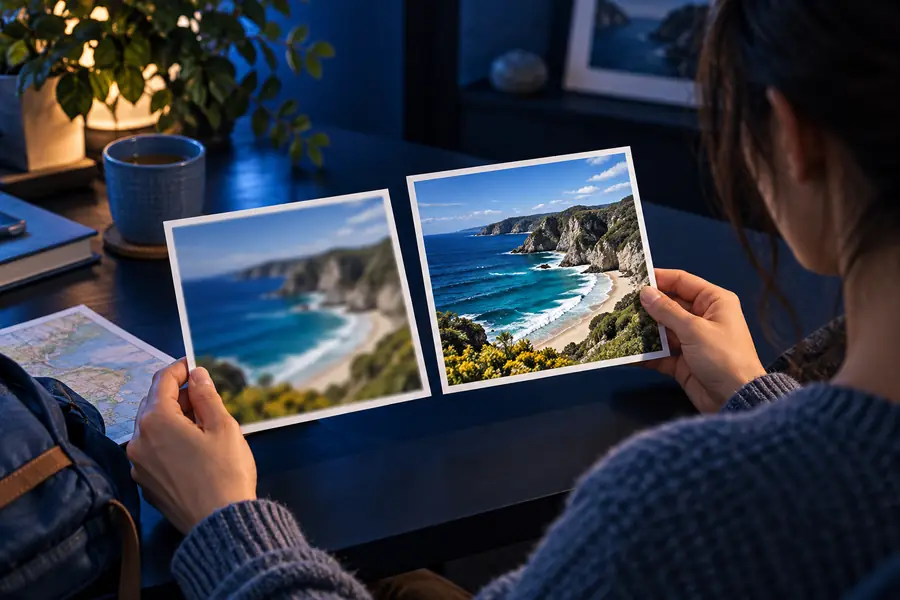
Illustrative comparison, not a guaranteed result. Strong sharpening can produce halos, emphasize noise, or make guessed detail look convincing. Keep the untouched original for reference.
Take an image with mild blur and a clear subject to the destination, then review its current input options and access terms. Compare any result with your original at normal size and close up; if meaningful detail remains absent, consider another photo rather than a stronger effect.
Availability and usage terms depend on the destination and may change. Check its current terms before uploading rather than assuming a search result includes unrestricted access.
A mild blur can sometimes look better after a restrained adjustment. Severe motion blur, missed focus, and tiny source images may lack the detail needed for a trustworthy recovery.
Heavy sharpening can create bright outlines and bring out grain or compression artifacts. Compare the subject at its intended viewing size and reduce the adjustment if textures look harsh.
Be cautious, especially with text, faces, or identifying details. Enhancement can make uncertain features appear definite, so retain the original and avoid presenting an interpretation as recovered fact.
Read the destination’s current privacy and handling information, along with its supported input options. If the image is sensitive and those terms do not meet your needs, do not submit it.